The numbers
U.S. supplier revenue for spirits-based ready-to-drink (RTD) cocktails rose 16.4% in 2025 to $3.8 billion, according to the Distilled Spirits Council. Total spirits revenue fell 2.2% to $36.4 billion over the same year, the second straight annual decline.1, 2
| U.S. spirits, 2025 | Revenue | Change |
|---|---|---|
| Spirits-based RTD cocktails | $3.8B | +16.4% |
| All spirits | $36.4B | −2.2% |
What Act 86 changed
Act 86 of 2024, in effect since September 16, 2024, created a ready-to-drink cocktail (RTDC) permit.3 Under it:
- Retail liquor licensees that qualify for a wine expanded permit, including restaurants, hotels, grocery stores and convenience stores, can apply, along with beer distributors and importing distributors.
- Products must be in original containers of up to 16 ounces and between 0.5% and 12.5% ABV.
- Retail permit holders can sell up to 192 fluid ounces of RTDs per transaction, on top of the beer and wine limits.
- Permit holders must be certified in the Responsible Alcohol Management Program (RAMP).
- Sales under the permit are for off-premises consumption, meaning to go.
The permit carries its own fees. A trade group representing smaller bars and taverns told The Philadelphia Inquirer those fees make it a hard sell for small businesses.4
What it didn’t change
The RTDC permit is about to-go sales. It doesn’t change how a bar with a restaurant or hotel liquor license serves drinks on its own premises. A spirits-based canned cocktail served at your bar is handled like any other spirit you pour.
Read the label
Not every canned “cocktail” is spirits-based. Many are made on a malt or wine base, and the base decides which kind of alcohol it legally is. That matters most if you hold an eating place (E) license, which covers malt and brewed beverages only. Check the label, ask your distributor, and ask your attorney before you add a new category.
Why cans fit a busy bar
At the peak, every espresso martini and old fashioned competes for the same bartenders. A canned cocktail takes as long to serve as a beer, tastes the same every time, and counts like any other can at close. For guests who want a mixed drink without waiting behind a round of shaken ones, it’s the fast option.
Canned cocktails in a DrinkDock
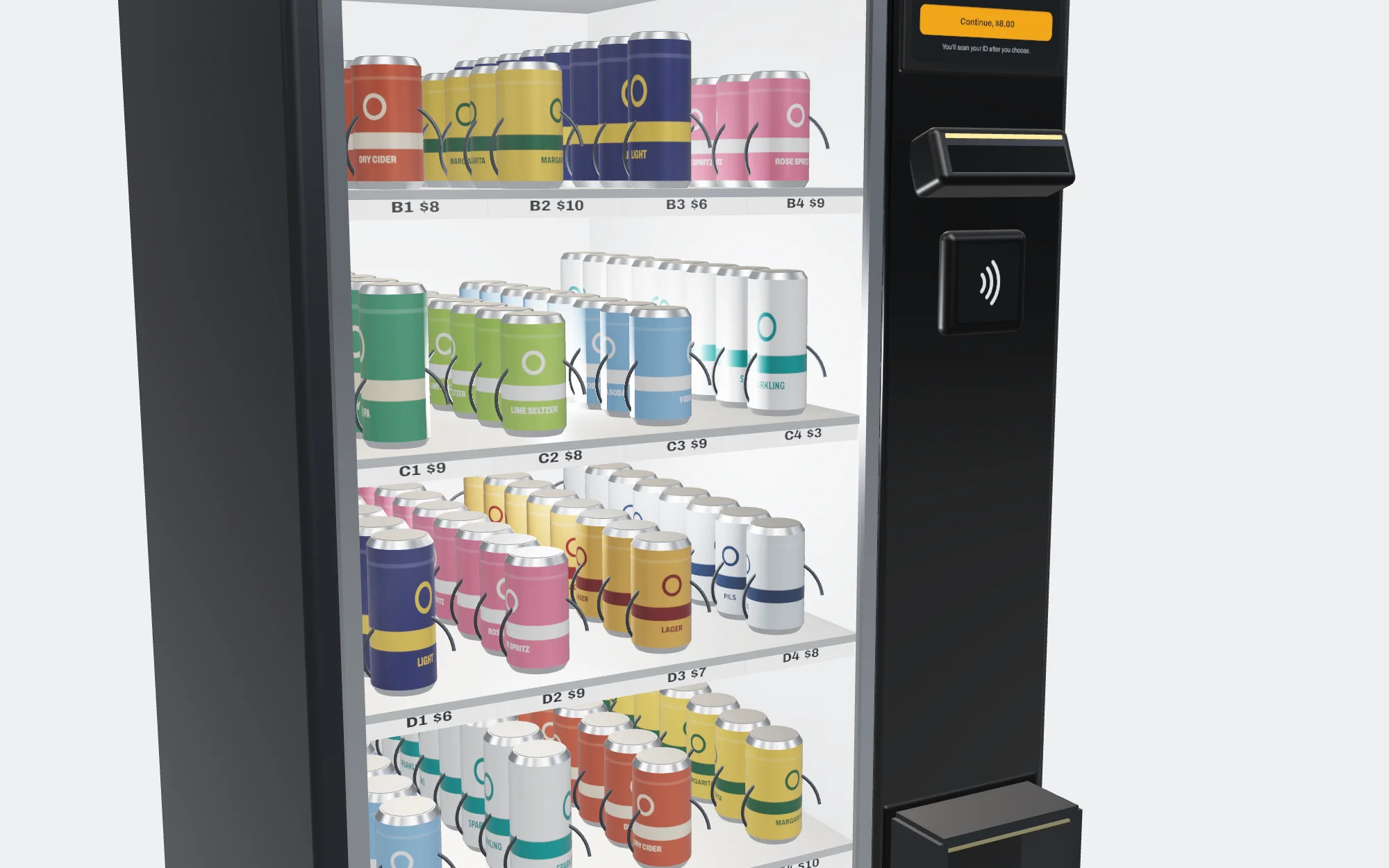
DrinkDock machines hold 12, 16 and 19.2 oz cans, so canned cocktails load on the same trays as beer and seltzer and sell with the same ID check. The machine sells for consumption on your premises, under your license. It doesn’t make to-go sales.
This article is general information, not legal advice. For questions about your license, talk to a liquor attorney.
Sources
- Distilled Spirits Council of the United States, Annual Economic Briefing, February 2026
- The Spirits Business, “Spirits sales fall 2.2% in US in 2025,” February 6, 2026
- Pennsylvania Liquor Control Board, “PLCB Summarizes Acts 57, 86 of 2024, Detailing Liquor Law Changes,” August 1, 2024
- The Philadelphia Inquirer, “Canned cocktails are coming to restaurants, grocery stores, and gas stations near you,” July 2024